


Serving healthcare
professionals
See the testimony of Professor William Harrop-Griffiths, Consultant Anaesthetist, Imperial College Healthcare NHS Trust, London, United Kingdom
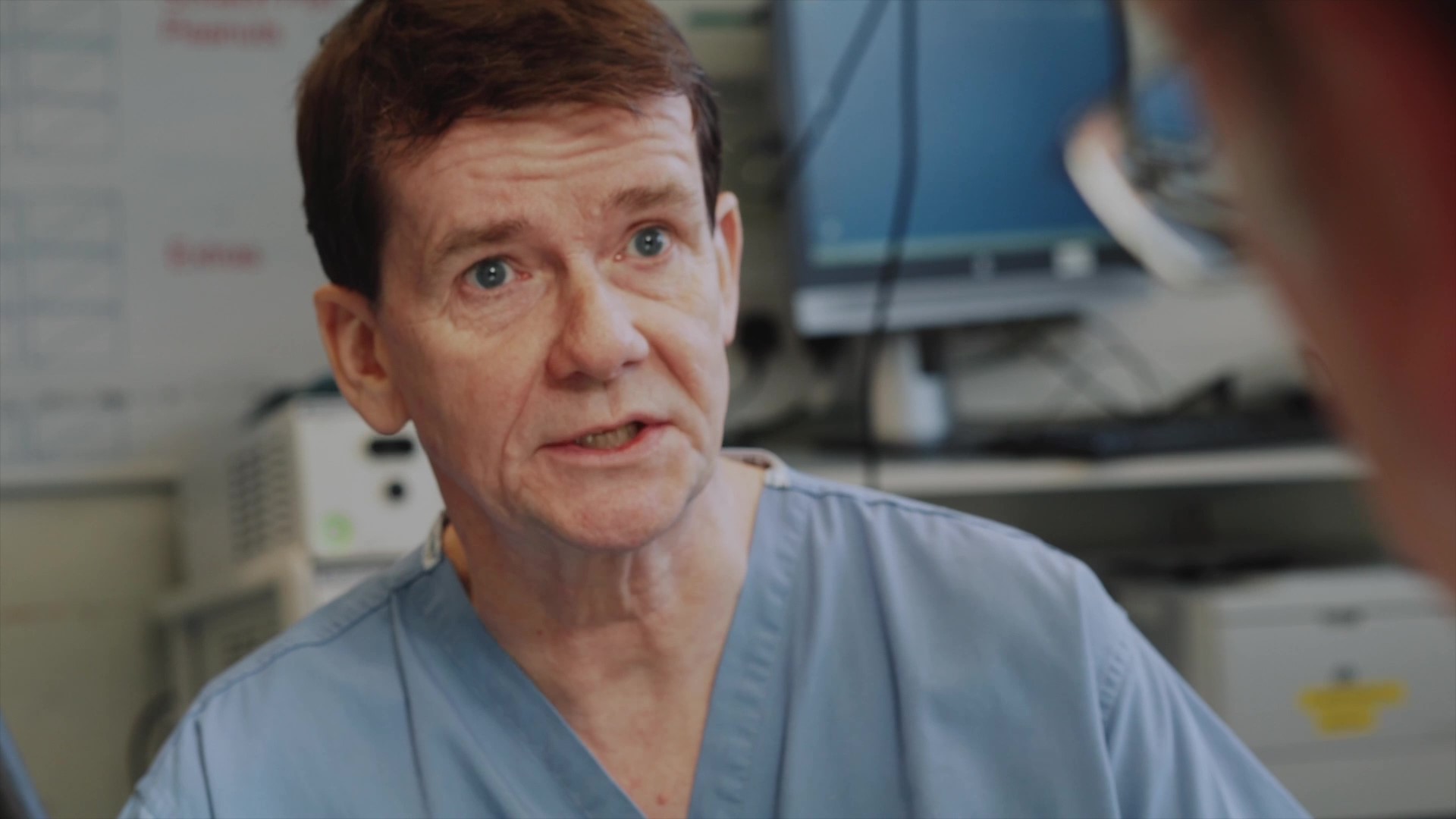
« Recommends that pre-filled syringes should be used wherever possible. » (1)
recommends, « minimise bedside preparation of intravenous medications and replace with procured and centrally prepared « ready-to-administer » or « ready-to-use » medications wherever possible. » (2)
« Experts suggest that anaesthetists preferentially use pre-filled syringes for occasional use medications when they have them, rather than preparing these medications in advance in conventional syringes, to reduce the environmental impact of general anaesthesia » (translated) (3)

London, United Kingdom - (extrait ref INT 138/00)
Description
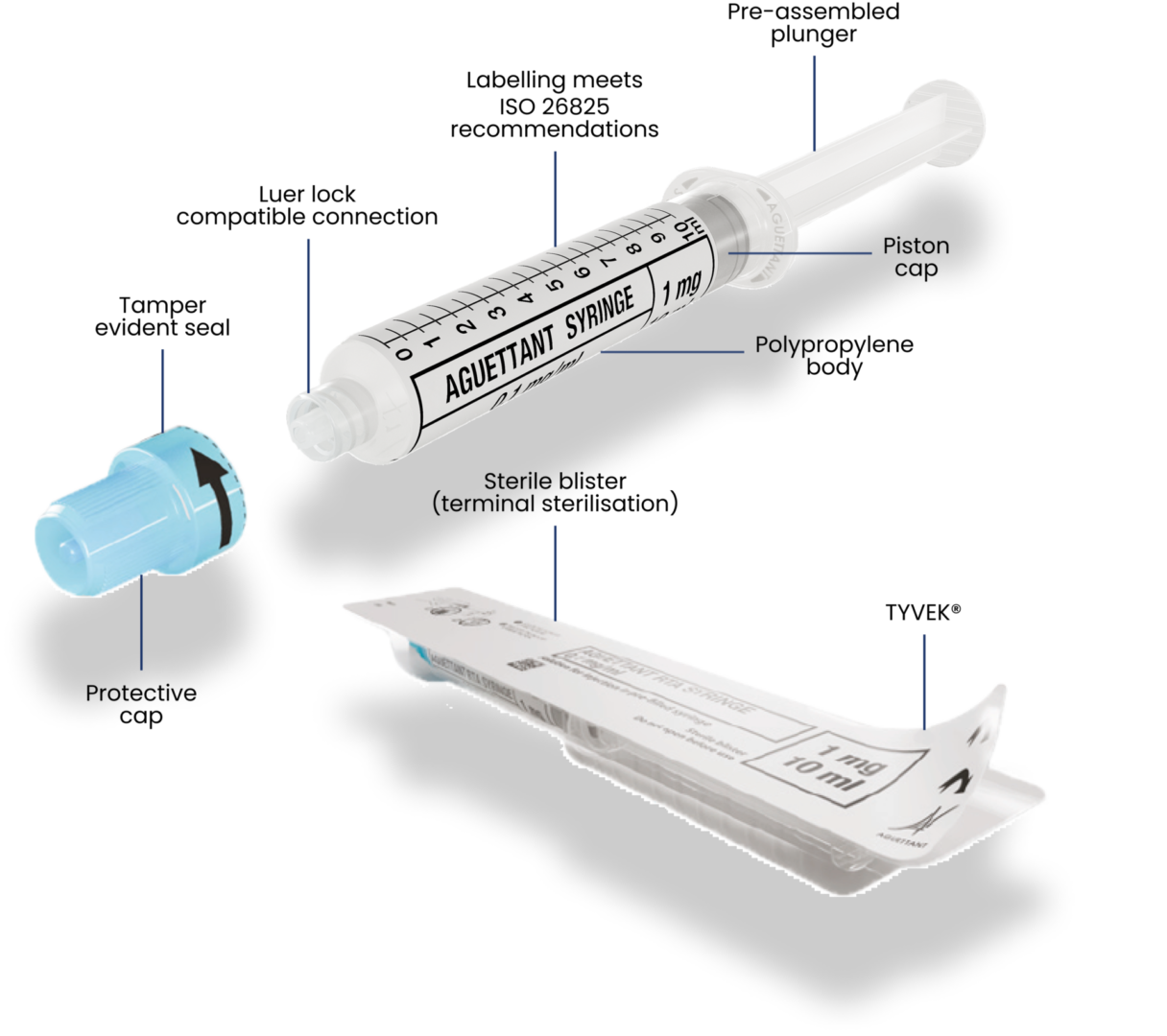
Our polypropylene syringes are delivered pre-filled and ready-to-use in sterile packaging.
We strive to design innovative, ready-to-administer solutions to prevent medication errors, especially in emergency situations. (4)
Thirteen drugs for injection in pre-filled syringes already exist and others are under development.
Ready to Administer
at a Glance
Reduction of
medication errors

Reduced administration
delays
When fast administration is essential, hand-preparing drugs at the bedside can result in delays in treatment. (5)
Ready-to-use pre-filled syringes eliminate preparation time, making them a suitable solution for emergency situations.

Reduced risks of injuries
for healthcare professionals
Use of pre-filled syringes eliminates needle-stick and cut injuries when opening glass ampoules. (7)
Waste and
waste reduction
Up to 86% of injectable drugs prepared in advance in the operating theater and intensive care are discarded at the end of the day. (8)
Considering all components used in the preparation steps of ampoules (syringe, drug, needle, pad, diluent...etc), pre-filled syringes could reduce your overall plastic use and the amount of waste you send to incinerators.
Time saving
for caregivers
Opting for pre-filled syringes means spending more time with patients.
(2) EAHP Report 2023 GIG Special Interest Group for the investigation of medication errors in intensive care units
(3) SFAR Guidelines for Reducing the environmental impact of general anaesthesia 2022
(4) Preckel B et al. Ten years of the Helsinki Declaration on patient safety in anaesthesiology. Eur J Anaesthesiol 2020; 37:521–610
(5) Adapa RM, Mani V, Murray LJ, Degnan BA, Ercole A, Cadman B, Williams CE, Gupta AK, Wheeler DW. Errors during the preparation of drug infusions: a randomized controlled trial. Br J Anaesth. 2012 Nov;109(5):729-34. doi: 10.1093/bja/aes257. Epub 2012 Jul 31. PMID: 22850220.
(6) Gargiulo DA, Mitchell SJ, Sheridan J, et al. Microbiological contamination of drugs during their administration for anesthesia in the Operating Room. Anesthesiology 2016; 124; 785-794.
(7) European Agency for Safety & Health at Work. https://osha.europa.eu/en/legislation/directives/council-directive-2010-32-eu-prevention-from-sharp-injuries-in-the-hospital-and-healthcare-sector
(8) Barbariol F, Deana C, Lucchese F, Cataldi G, Bassi F, Bove T, Vetrugno L, De Monte A. Evaluation of Drug Wastage in the Operating Rooms and Intensive Care Units of a Regional Health Service. Anesth Analg. 2021 May 1;132(5):1450-1456.